CES 2026: Key Industry Signals
What They Mean for Product, Sourcing and Supply Chain Leaders
By Al Fortino
Director of Sales & Business Development
CES 2026 made one thing clear for AI and electronics-driven products: speed is now the competitive advantage — and it increasingly comes from execution capability.
AI isn’t just moving fast; it’s compounding. What feels sudden is acceleration finally showing up in real products, real systems, real markets. Development cycles are shorter, adoption curves steeper, and waiting for certainty isn’t cautious anymore — it’s how teams get left behind.
For product, sourcing, and supply chain leaders, this shift matters because speed is no longer owned by R&D alone. It is shaped—and often limited—by supplier readiness, manufacturing integration, and execution discipline.
Capability Has Replaced Narrative
Another signal from CES was impossible to ignore: capability now beats storytelling. The market no longer rewards concepts or pitch decks.
What matters is:
- Does the product exist?
- Where does it run?
- How does it integrate?
- Does it make economic sense?
CES showed a market that’s matured fast — execution, scalability, and ROI beat novelty. Proof outweighs promise.
For product, sourcing, and supply chain teams, this change how suppliers should be evaluated. The question is no longer “Who has the most ambitious roadmap?” but “Who can demonstrate readiness—early and credibly?”.
This is why early validation environments, such as product development labs using real production processes or machines, have become critical. They reduce reliance on assumptions and surface risks before they become delays.
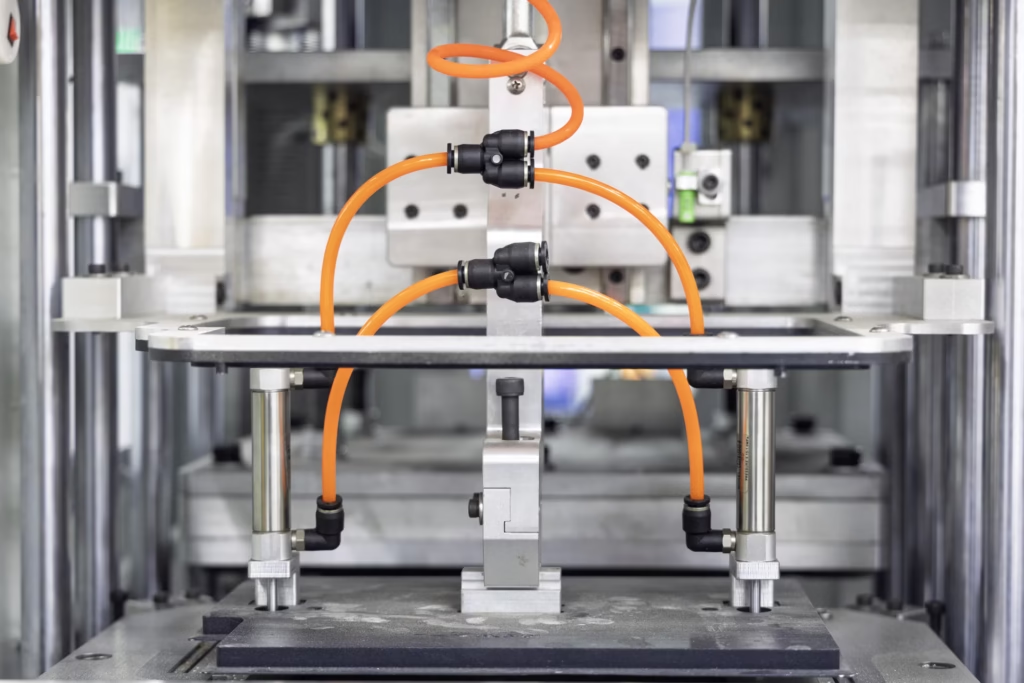
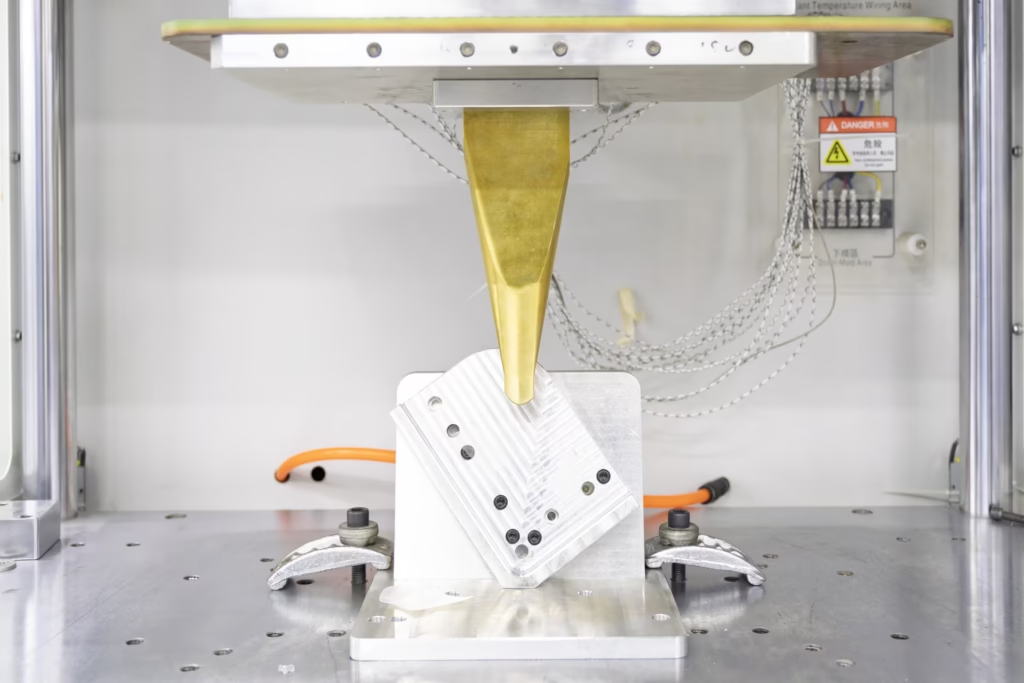
Real production early: cut validation risks
AI Is Embedded — and Complexity Has Shifted Downstream
AI is no longer trapped in software. It’s embedded directly into the physical world — machines, tools, vehicles, wearables, and systems operating in real environments.
Robotics and automation have crossed from experimentation into real-world deployment, starting in controlled settings like factories, logistics, and enterprises. Consumer electronics and wearables are accelerating in parallel — often entering consumer markets first, then being hardened for enterprise, productivity, health, industrial, jobsite, and safety use cases.
CES didn’t introduce this shift; it confirmed it.
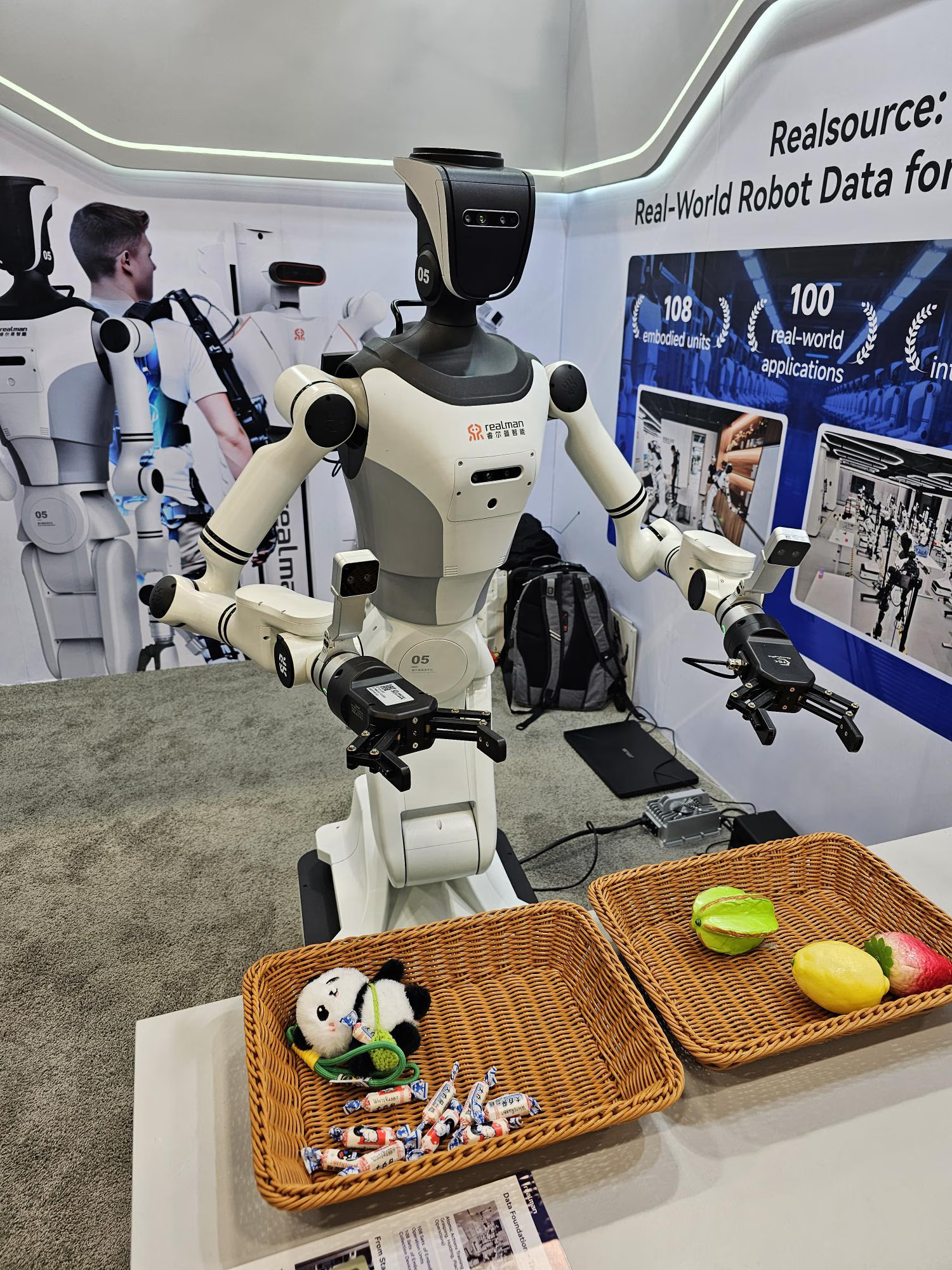
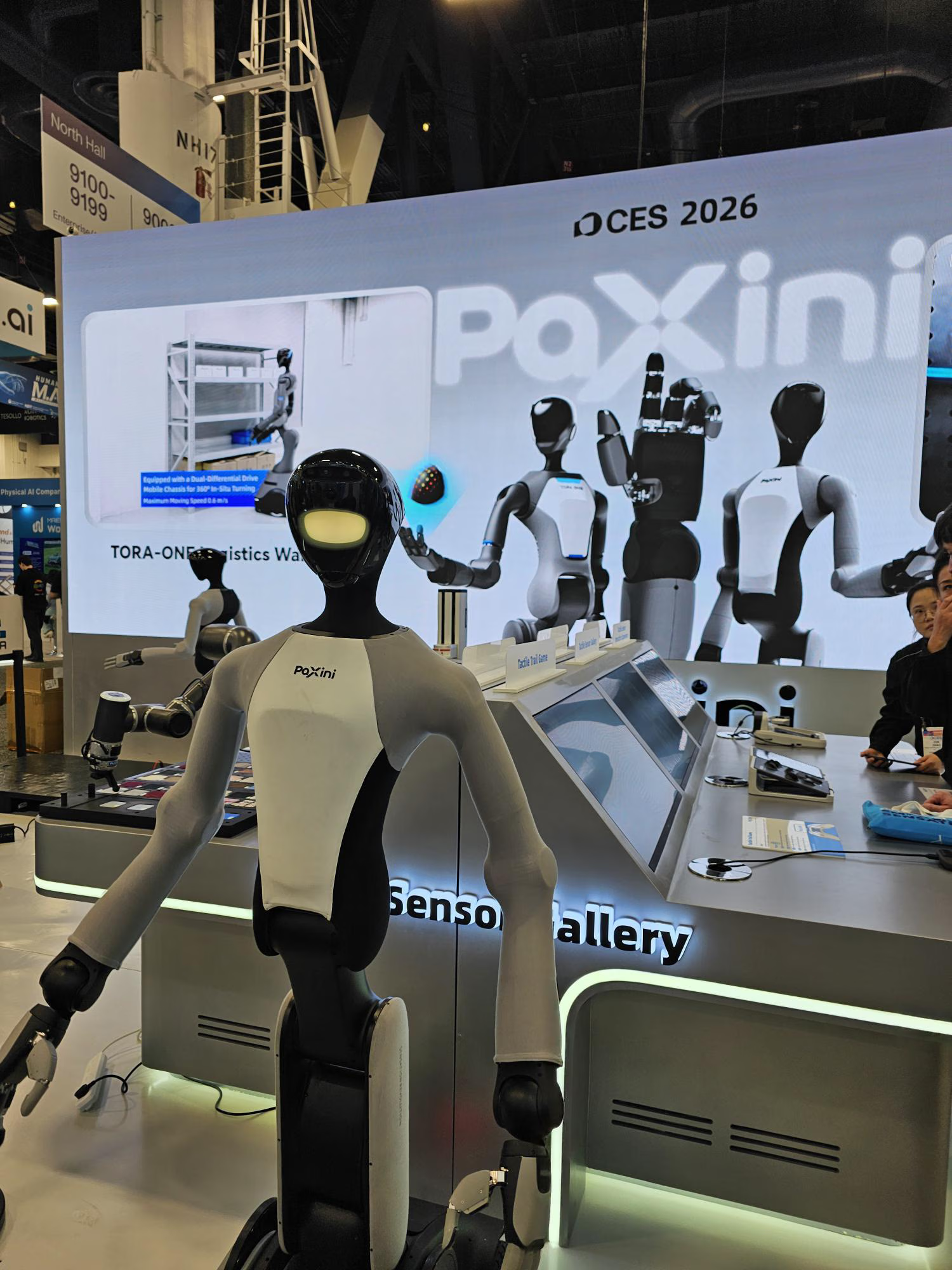
AI-driven products increasingly appear
For product, sourcing, and supply chain teams, this means integration risk has increased. When electronics, engineered soft goods, materials, and manufacturing are handled separately, complexity shows up late—during testing, pilot builds, or even ramp-up.
This is why integration capability—where electronics and engineered soft goods are developed and validated together are becoming a competitive advantage, not a convenience.
Scale Is Stress-Testing Everyone
There’s real proof of how fast this is moving. Even the largest technology players are hitting limits — where demand, complexity, and execution outpace internal capacity.
When players with global scale are forced to rethink next-gen launches, it sends a clear signal: external support isn’t optional — it’s mandatory, especially as products span multiple technologies and categories at once. And most development and manufacturing partners are not setup or capable to integrate across various market verticals.
The advantage no longer comes from doing everything in-house. It comes from having partners who can absorb execution pressure, manage complexity, and keep programs moving forward without adding friction.
Capability Still Decides Who Wins
Underneath all of this is what actually decides who wins: capability wins.
Access to chips, energy, manufacturing capacity, automation, resilient supply chains, and execution speed matters more than the software itself. That’s why the conversation inevitably leads to Asia — not by preference, but reality.
For product, sourcing, and supply chain leaders, the implication is clear: both execution readiness and geography matter. The real risk is not only where suppliers are located, but how the integration capability is.
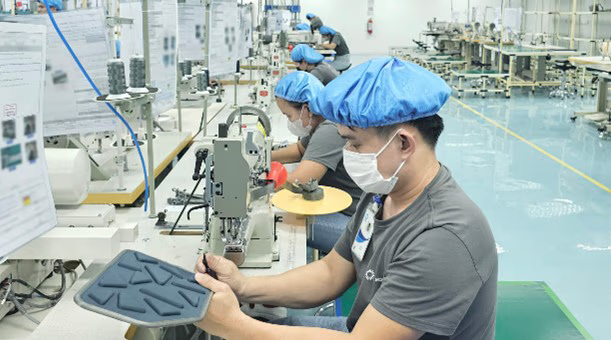
Integration capability reduces fragmentation
As products span electronics, engineered soft goods, and physical manufacturing across regions, risk no longer sits in any single function. It accumulates at the seams—between teams, suppliers, and handovers. That’s where manufacturing partners with integration capability under one roof help mitigate the risk of fragmentation.
What This Means for OSM Group
OSM Group doesn’t win by building everything in-house or pretending we can out-innovate technology leaders. That’s not realistic, cost-effective, or necessary.
We win by being:
- Fast enough to keep pace with compressed timelines
- Capable enough to integrate complexity early
- Connected enough to accommodate all our partners’ needs with an array of options
In practice, this means acting as a risk absorber and execution enabler for brands that are already stretched on bandwidth, coordination, and internal capacity.
- Our integrated product development labs reduce late-stage surprises.
- Our automation investments support consistency and scale.
- Our co-located electronic engineering and engineered soft goods R&D Teams reduce handovers and delays.
- Our expanded manufacturing capacity in the Philippines ensures programs don’t stall when volume ramps or regulatory problems arise.
This is not about doing everything—it’s about orchestrating execution so our partners don’t have to.
The Bar Has Changed
CES 2026 made one thing clear: storytelling without substance no longer works. Customers expect proof from day one — proof of understanding, execution paths, credibility, and flexibility. Proof of concept, validated partners, and real readiness matter far more than vision decks or promises.
OSM Group doesn’t need to lead AI — or every technology. For specific segments and programs, we can and should lead. Everywhere else, the goal is simple: leverage partners and move fast enough to be the solution — not the bottleneck.
The continuous compounding of AI and technology isn’t coming — it’s already here, and it’s only going to move faster!
About OSM Group
OSM Group was founded in Sweden in 2004. With strategically located production facilities in China and the Philippines and an R&D hub in Stockholm, we support leading brands worldwide with expertise-driven and reliable manufacturing solutions. Our vision is to deliver exceptional and sustainable products that strengthen our customers’ market competitiveness and long-term success. By combining Scandinavian heritage with a culture rooted in integrity, collaboration, and continuous improvement, we are committed to building enduring relationships based on trust and mutual growth.
Topics
Category
Discover More