From Idea to Mass Production
Connecting Design, Engineering and Manufacturing
The smart wearable market continues to grow as brands introduce products that increasingly combine connectivity, sensors, batteries, wireless charging and compact electronics. As these products become more sophisticated, the challenge extends beyond the device itself. Companion products such as charging cases and protective covers are also becoming part of the overall product system, combining engineered soft goods, electronics, materials and mechanical structures in compact forms.
For industrial design and product development teams, the real challenge is not generating an idea. It is making sure decisions made during the design stage remain viable through engineering, validation and mass production.
When the Accessory Becomes Part of the Product Experience
Smart glasses are a clear example. They are typically sold as a two-part product, but the charging case is often treated as a secondary accessory. In reality, the case is handled every day, remains visible to the user and has a significant physical and material presence. As the market develops, the charging case increasingly becomes part of the product experience, and ultimately part of the brand experience.
A charging case may need to protect the wearable, house a battery, support charging, provide status indicators, and meet requirements for size, materials and appearance.
With this in mind, we developed a collection of smart glasses charging case concepts to explore different product forms and user interactions around a common charging architecture. A removable magnetic charging platform separates the charging function from the main case construction, allowing the same core technology to support different forms, materials, CMF and user experiences.
Especially, as more brands enter the market, price points will spread and the underlying hardware will increasingly commoditise. As the hardware itself becomes harder to differentiate, design, materials and brand experience will carry more of the differentiation. A common platform makes room for that, whether it’s seasonal collections, premium and entry-level variants sharing one engineering backbone, or eyewear, fashion and luxury brands that see no reason the case should be designed by whoever designed the electronics.


Connecting the Decisions Before Production
For hybrid products, engineered soft goods and electronics cannot be developed entirely independently. The same applies to CMF and manufacturing. A material change can affect forming or bonding. A change on the PCBA can can reduce the available space. A change in product construction can affect tooling and assembly processes. This connection needs to happen early. When the relevant disciplines are involved while the design is still flexible, decisions around materials, construction, component placement, manufacturing processes and assembly can be considered within the same development framework rather than addressed individually at later stages.
We bring product development, engineered soft goods, electronics engineering and manufacturing capabilities into the same development path, covering ideation, industrial design, material development, electronics design, prototyping, testing, DFM (Design for Manufacturing) validation and manufacturing.
Engineering Cost and Manufacturing Readiness
Material selection, construction methods and component architecture establish much of a product’s final cost before tooling begins. Addressing these trade-offs while the design is still flexible allows cost to be engineered into the product rather than discovered late in development.
The same principle applies to manufacturing readiness. Our product development labs in China supports prototype builds, material selection and verification, DFM validation and small pre-production runs using production equipment and processes such as heat press bonding, die cutting, high-frequency welding, and assembly.
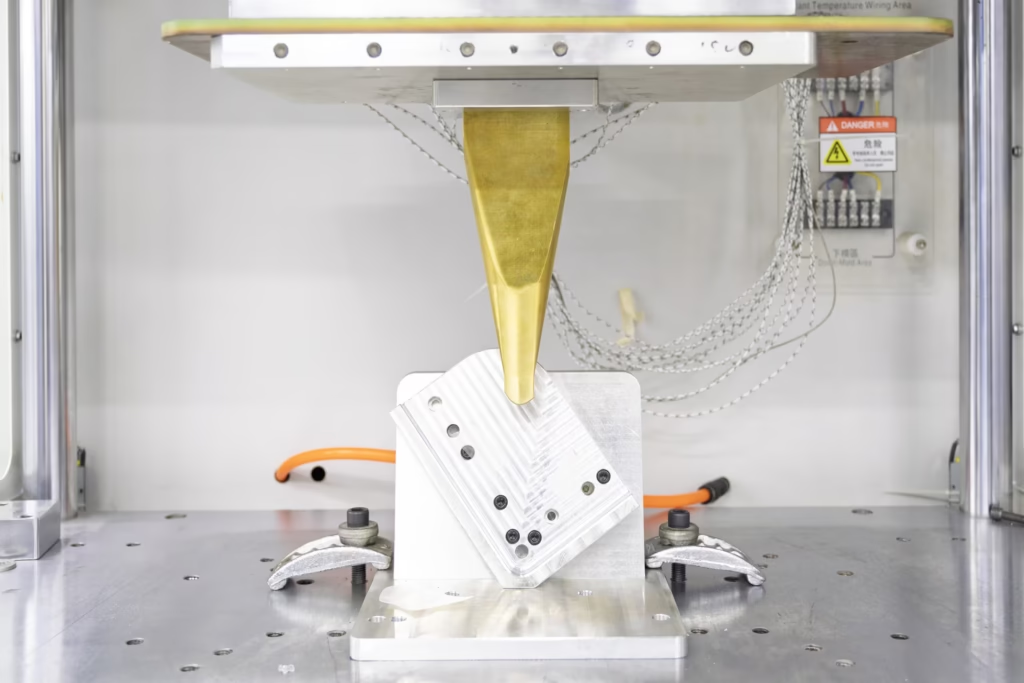
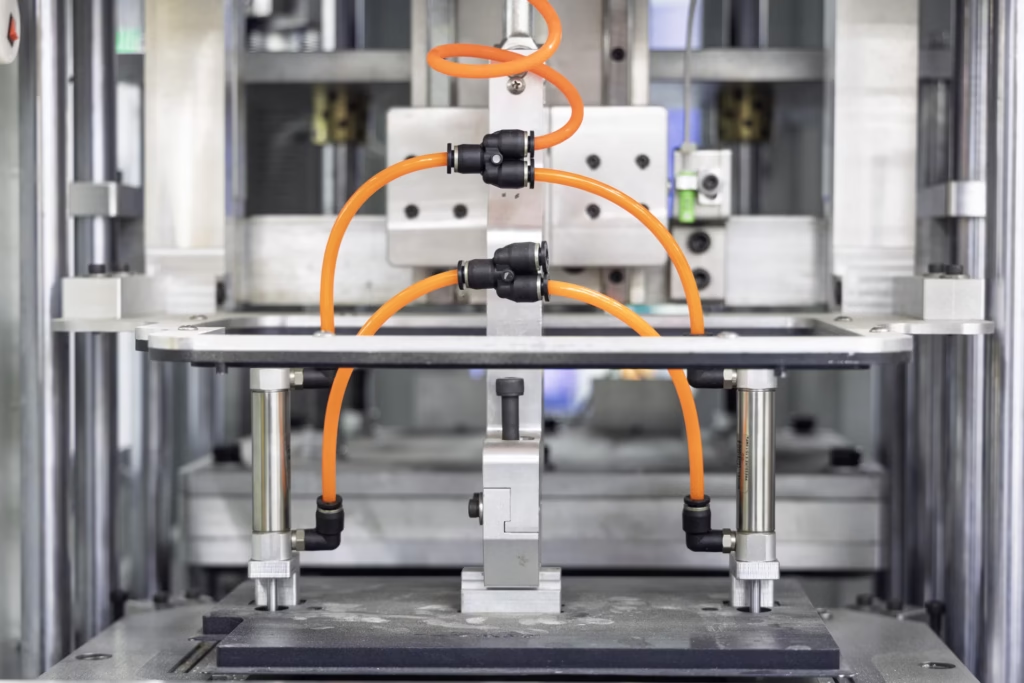

Product Development Labs in China
Using production processes during development helps expose process and tooling risks earlier. A prototype that looks correct may still require changes to materials, construction, tooling or assembly before it is truly ready to scale.
One Development Path, From Idea to Mass Production
Focals by North Smart Glasses Charging Case is a practical example of how different disciplines can come together in one product.
The compact case was designed to charge both smart glasses and a gesture-control ring while integrating a rechargeable battery, USB-C charging circuitry, LED indicators and a felt-like enclosure. Its development involved electronics engineering, engineered soft goods, battery management and quality assurance, combining formed shells, die-cut components, fabric wrapping, charging contacts and a battery module.

Dig deeper: Premium Charging Case Delivers Portable Power for Smart Glasses Ecosystem
The value of an integrated development model is not simply having more services under one roof. It is having the right teams involved before a design decision becomes a production problem.
From concept and engineering through validation, prototyping and manufacturing, we connect the key decisions that determine whether complex products can be built reliably and at scale. Our capabilities cover the following product categories:
- Portable Audio e.g. Industrial and Consumer Headphones, ANC Headphones, Bluetooth Speakers, Radio Communication Systems
- Personal Protection e.g. Advanced Hearing Protection Solutions
- Hybrid solutions – Engineered Soft Goods with Integrated Electronics e.g. Diagnostic Pads, Tracking Devices, Smart Wearable Charging Cases, AR Laptop Covers with Integrated Speakers, Antenna
- Carry Solutions e.g. Travel Case, Carrying Laptop Bag, Backpack
- Specialised Sports Gear e.g. Weighted Training Vests, Hydration Packs and Functional Accessories
Explore What’s Possible.
Get-in-TouchAbout OSM Group
OSM Group was founded in Sweden in 2004. With strategically located production facilities in China and the Philippines and R&D in Stockholm, Hong Kong and China, we support leading brands worldwide with expertise-driven and reliable manufacturing solutions. Our vision is to deliver exceptional and sustainable products that strengthen our customers’ market competitiveness and long-term success. By combining Scandinavian heritage with a culture rooted in integrity, collaboration, and continuous improvement, we are committed to building enduring relationships based on trust and mutual growth.
Topics
Category
Discover More
-
为什么 OSM Group 不只是普通的制造工厂
Manufacturing decisions can influence product success long before production begins. OSM Group combines integrated R&D, Design for Manufacturing, and global manufacturing to reduce risk and…
-
强化制造运营,更好地支持客户
Reliable manufacturing depends on experienced leadership, disciplined execution, and the ability to scale efficiently while maintaining consistent quality and delivery, strengthening our foundation for long-term…
-
从创意到量产
Hybrid products create risks when design, engineering and manufacturing decisions become disconnected. Discover how an integrated development path can identify issues earlier, control costs and…